





2026
16 September 2026 – Auckland
Refining the estimates of subsurface nitrate attenuation in New Zealand agricultural landscapes
Presented by: Stephen Collins (Beca Ltd.)
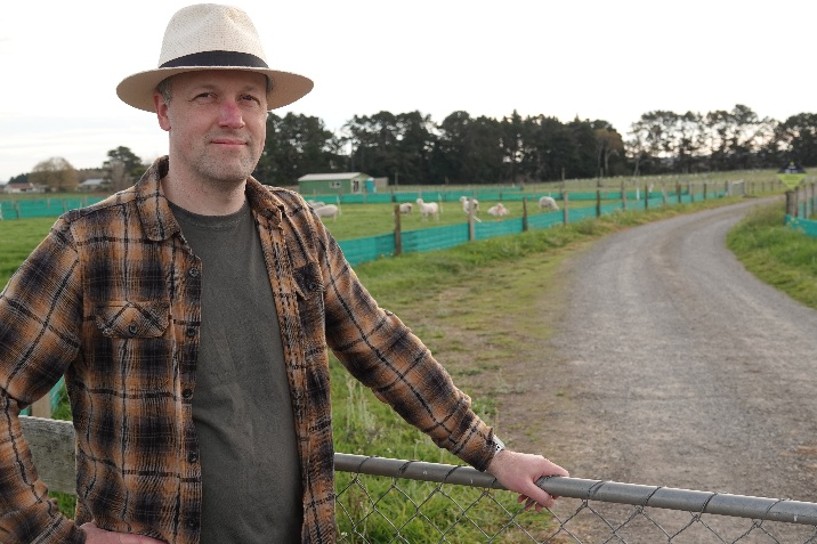
Profile: Stephen is a hydrogeologist with Beca in Auckland. He has a PhD in Soil Science and an MSc in Earth Science, both from Massey University.
Abstract: At the same time intensive agriculture is feeding millions of people around the world, it is also having harmful effects on freshwater ecosystems. Nutrients, particularly nitrogen and phosphorus, can escape farm boundaries and be transported to freshwater environments where they may cause eutrophication and reduce water quality. Further challenges to freshwater management arise because nitrate, a soluble form of nitrogen, can be naturally reduced, or ‘attenuated’ in some subsurface environments before reaching rivers and streams, but not enough is known about where or how much this occurs.
Stephen’s research investigated the extent to which some agricultural landscapes in the Horizons region of New Zealand effectively attenuate nitrate. Using groundwater chemistry data, machine learning and field measurements, he developed a new way to map nitrate attenuation at landscape unit scale. His research showed that nitrate attenuation varies considerably across landscapes and demonstrates a practical approach for estimating nitrogen losses to support freshwater management and land use planning.
The New Zealand Chapter of IAH gratefully acknowledges Beca for hosting this event.
3 September 2026 – Christchurch
Balancing community benefits from building new roads with environmental outcomes for streams and wetlands
Presented by: Eric van Nieuwkerk (WSP)
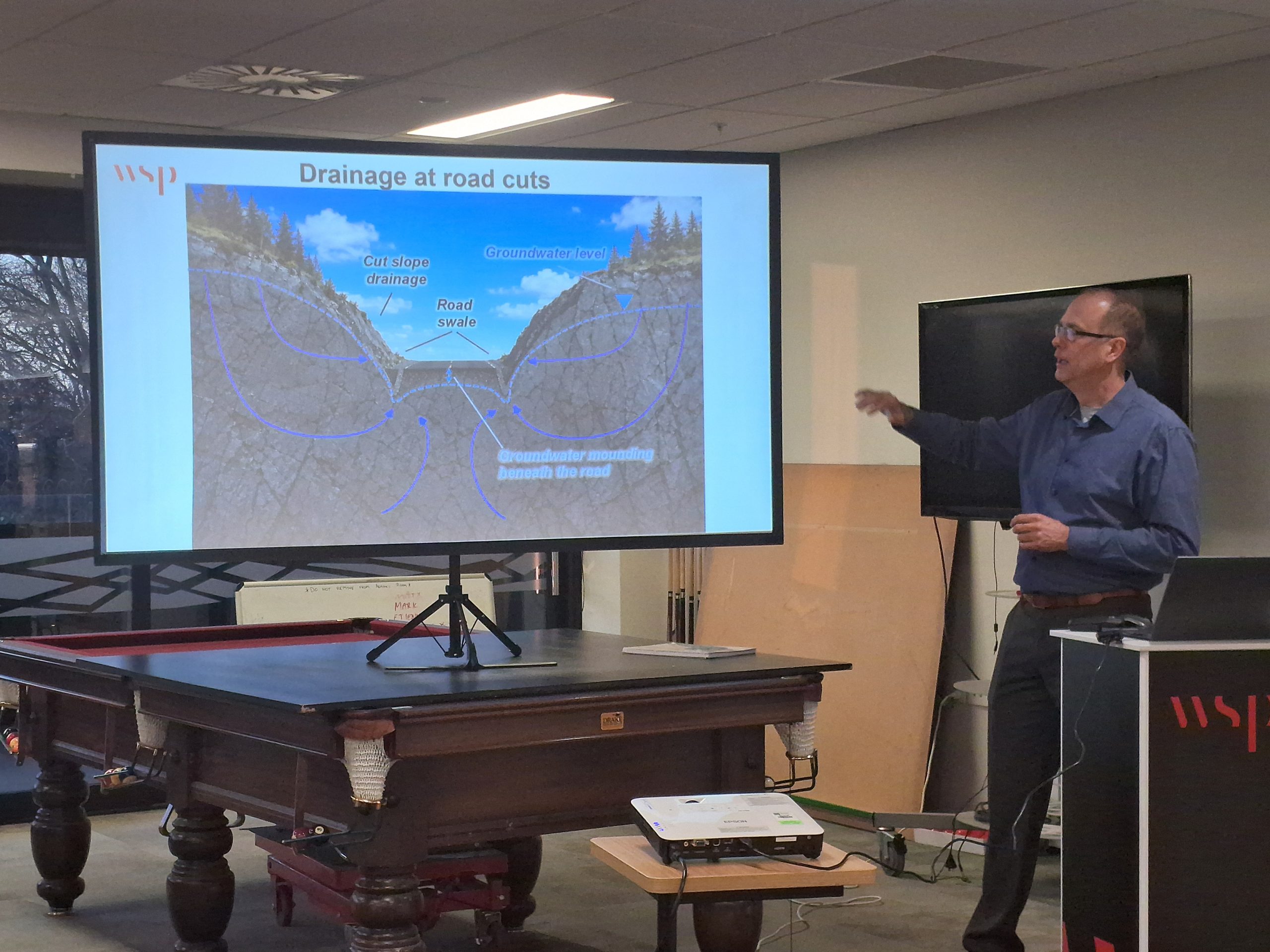
Profile: Eric has an MSc in Hydrogeology and has more than 25 years’ experience as a Hydrogeologist working in interdisciplinary teams, and has been responsible for a wide range of groundwater and environmental science projects including dewatering / depressurisation projects for construction, infrastructure, tunnelling and mining. Eric’s work involves supporting drainage systems design, aquifer testing, undertake water supply option studies, contaminant risk assessments and 2D / 3D numerical groundwater and solute transport modelling. Eric has extensive international experience in water resource investigations and civil engineering projects in both urban and rural areas, working for transport agencies, mining clients, industrial clients, municipalities, utility companies and regional authorities.
Abstract: This presentation described how new roads can change groundwater levels and flows in the wider area and consequently impact surface water baseflows. It explored the ways to assess impacts through field investigations and comprehensive modelling for large roading projects, and how better understanding the groundwater system can help identify environmental offsetting opportunities.
The New Zealand Chapter of IAH gratefully acknowledges WSP for hosting this event.
21 April 2026 – Christchurch
Nitrate state and trends: An assessment of historic data and the impact of a major irrigation scheme
Presented by: Helen Rutter (Lincoln Agritech Ltd)

Profile: Helen is a Senior Hydrogeologist at Lincoln Agritech Ltd. She has over 30 years’ experience in hydrogeological research and consultancy with an interest in groundwater and drinking water quality, shallow groundwater hazards, earthquake impacts on hydrogeological systems, hydrogeological aspects of ground source heat pump systems, and Canterbury Plains hydrogeology in general. She is a Chartered Geologist and a Senior Adjunct Fellow at the Waterways Centre at UC.
Abstract: In September 2025, ECan councillors declared a “Nitrate emergency” for the Canterbury region. This followed reporting that showed that across Canterbury, 36% of state-of-environment wells had nitrate concentrations greater than half MAV (5.65 mg/l) and over 60% of wells showed a very likely increasing or likely increasing trend. As reported by ECan, the gradual increase in irrigated land area and the associated rise in land use intensity since the 1990s, including a rise in the number of dairy farms, is believed to have resulted in increasing levels of nitrate leaching into groundwater.
Central Plains Water Ltd started in 2014–2017 and now provides water to 45,000 ha; of this, 25,000 ha represents new irrigation, where dryland was converted to irrigated land. The remaining 20,000 ha was land that was previously irrigated, mainly with groundwater. The consents to take water and discharge contaminants were highly contentious, and the outcome of the process was that CPWL have comprehensive monitoring requirements. Having been in operation for around 10 years, it is a useful time to assess the potential impacts of the scheme, and compare with what was predicted at the time of consenting.
The presentation explored some of the longer-term data and patterns that we see in terms of nitrate variability, explained a little about the CPW scheme, and outline the trends that we are observing now.
The New Zealand Chapter of IAH gratefully acknowledges Davis Ogilvie for hosting this event.
24 February 2026 – Christchurch
Late-Quaternary stratigraphy of the Christchurch Artesian System, coastal Canterbury Plains, New Zealand
Presented by: Carl Hanson (Environment Canterbury)

Profile: Carl has 35 years’ experience as a groundwater scientist, more than 20 of those leading groundwater quality science at Environment Canterbury. He holds a Master of Science degree in geology from Dartmouth College, USA.
Abstract: The late-Quaternary stratigraphy of the Christchurch Artesian System (CAS), located along the coast of the northern Canterbury Plains, New Zealand, is formally extended. Six new formations – three interglacial formations and three glacial climate formations – are identified and described. The sequence is recognised in water well logs that extend to depths of up to 250 m, where the Pliocene-Pleistocene Kowai Formation unconformably underlies the sequence and marks the base of the CAS. The new formations underlie the Wainoni Gravel and correlate with international marine isotope stages (MIS) 11-16. The three new interglacial, coastal-marine, fine-sediment units do not extend further inland than the interglacial units in the overlying MIS 1-10 sequence. The three new glacial gravel units and gravel aquifers merge westwards into the continuous sequence of alluvial gravel, sand and silt sediments underlying the inland Canterbury Plains. West of the CAS, it is impossible to distinguish stratigraphic units in bore logs, and the middle- to upper-Quaternary sediments are undifferentiated gravel deposits. This improved stratigraphic knowledge of the sediments beneath Christchurch is important for the sustainable management of the CAS groundwater resource.
The New Zealand Chapter of IAH gratefully acknowledges Tonkin & Taylor for hosting this event.